 HoopOps
Possession A
- The point guard brings it up against a set defense.
- Eight seconds of dribbling without moving anyone.
- Step-back three with a hand in the face.
3 ptsMakes it
The scoreboard rewards it.
Analytics for the basketball that has no data feed
Plenty of coaches teach advantage basketball. Very few tools show you how to measure it. These do: with normal game film, a spreadsheet and a pen, you find out whether your offense creates an advantage, keeps it on the next pass and sees the open player in time. Then you train the link that breaks.
14-day money-back guarantee · instant download · + tax
The problem
Two possessions from the same game. Look at them the way the scoreboard does, then the way a coach should. Only one of them tells you what to practice on Monday.
The scoreboard rewards it.
The scoreboard punishes it.
The method
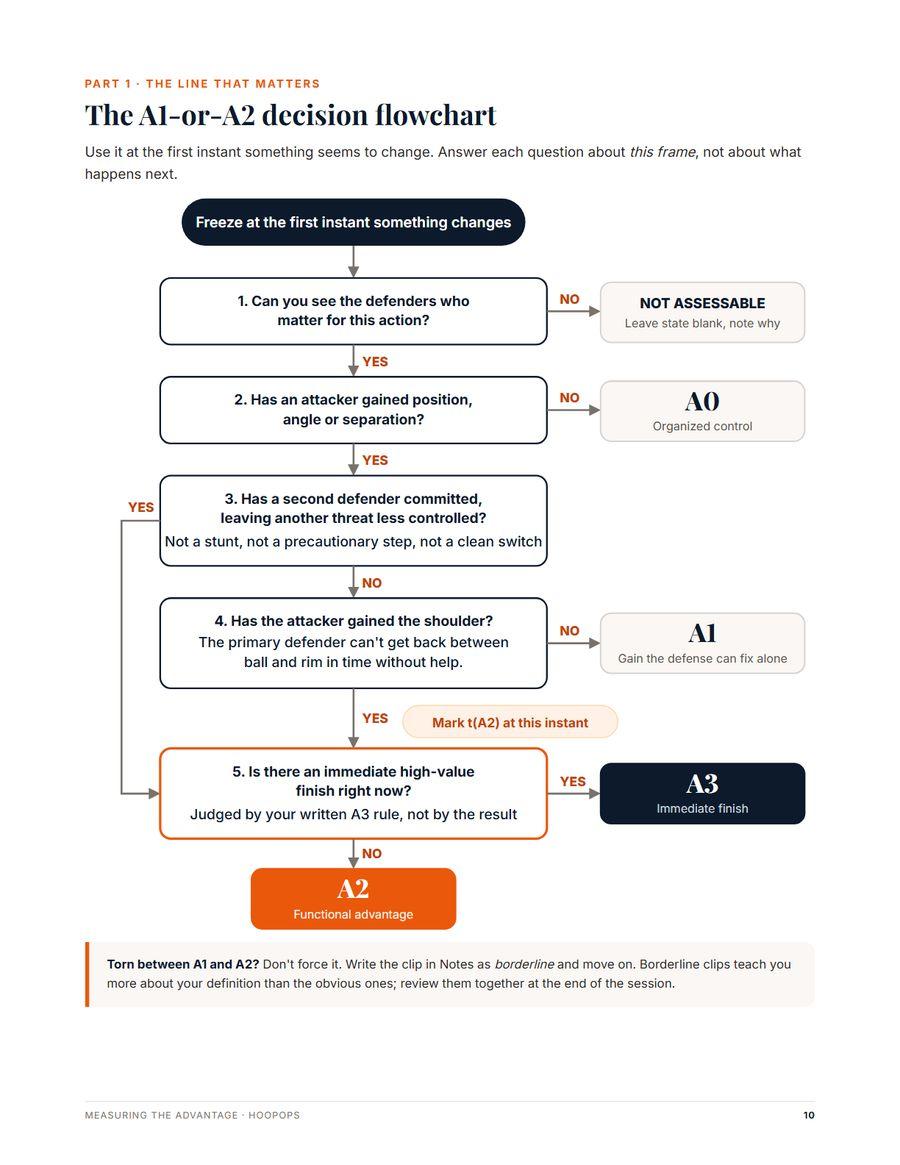
Every possession moves through four states. A2 is the line: a defender has to leave a responsibility and someone is open. The tools in this line count how often you get there, whether you keep it, and whether you use it.
A0. The defense is set. Nothing has happened yet.
Who it's for
Synergy, KenPom and tracking data exist where there is a data feed: Division I and the pros. Most of basketball has no feed. D2, D3, NAIA, JUCO, high school and amateur programs have film and a staff that wants answers. This line works with exactly that.
It's for you if
It's not for you if
How it works
1 · Audit 10 possessions
Start with the free audit: pause before the shot, mark the highest state, and see whether you have a creation or a conservation problem.
2 · Code a game
Use the workbook's protocol and the Analyzer log. One row per possession, dropdowns for every code. About 30 minutes per game.
3 · Read the dashboard
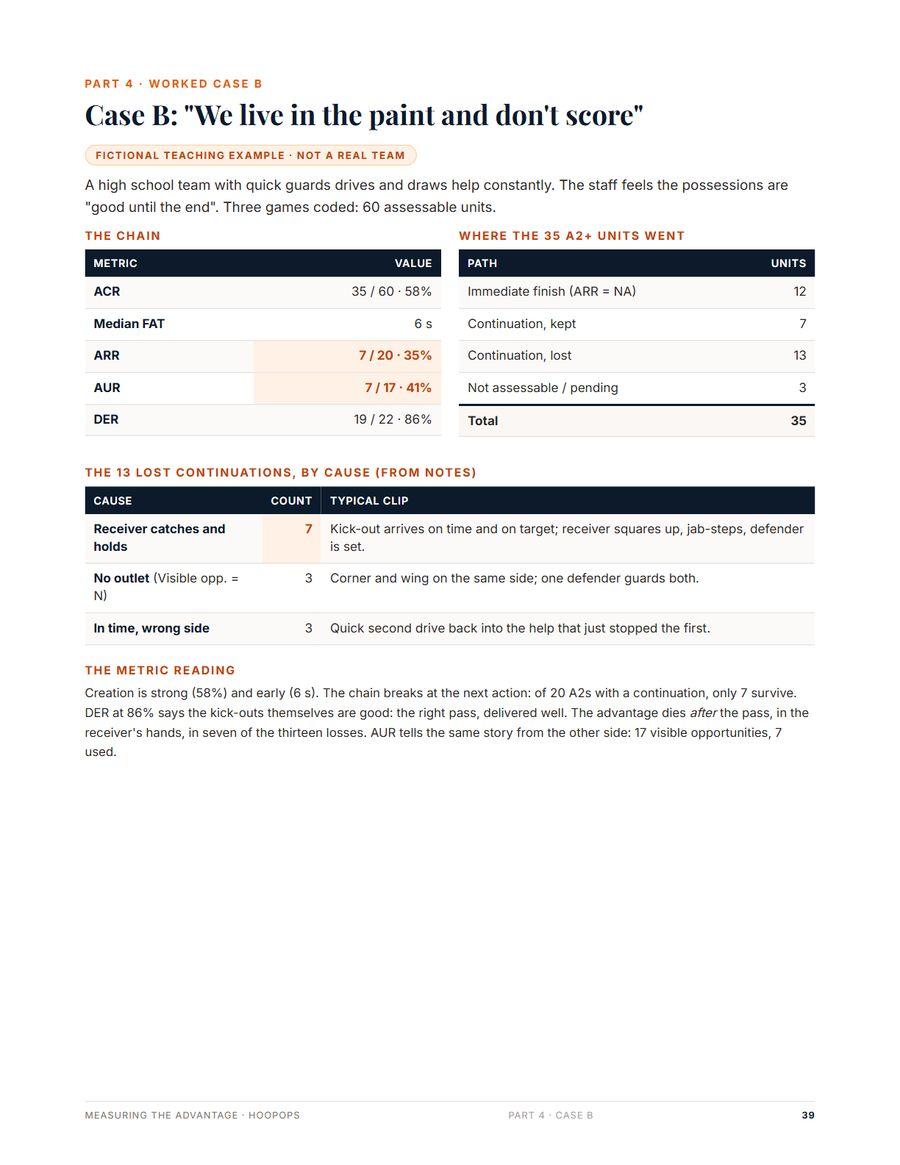
The Analyzer calculates creation, retention, use, decision-execution and time to first advantage, by play type, lineup, quarter and game.
4 · Train the weak link
Pick the games that match your diagnosis from Advantage → Decision, and the actions from the Playbook. Re-code in three games.
Measure · the flagship
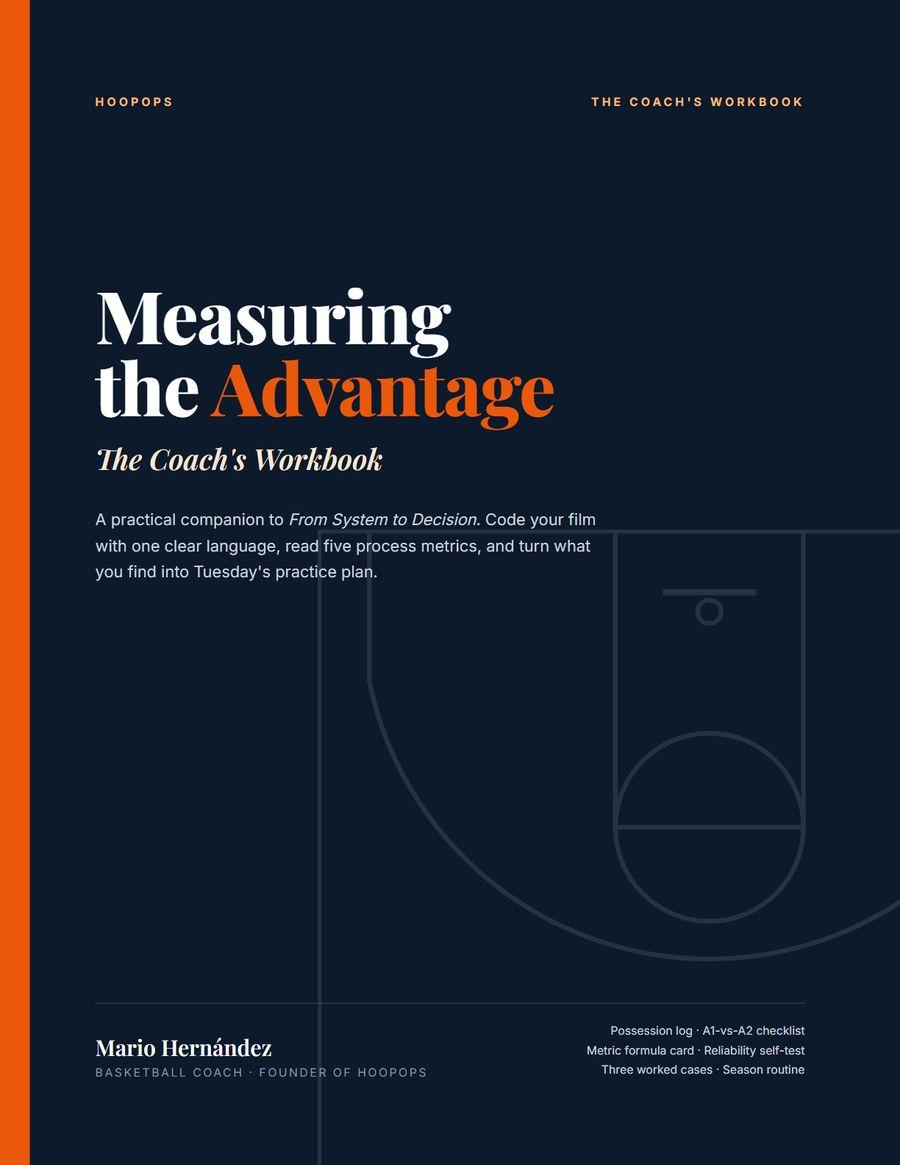
The coach's workbook and the Analyzer spreadsheet: code your film, read five process metrics, plan Tuesday's practice.
Create · the actions
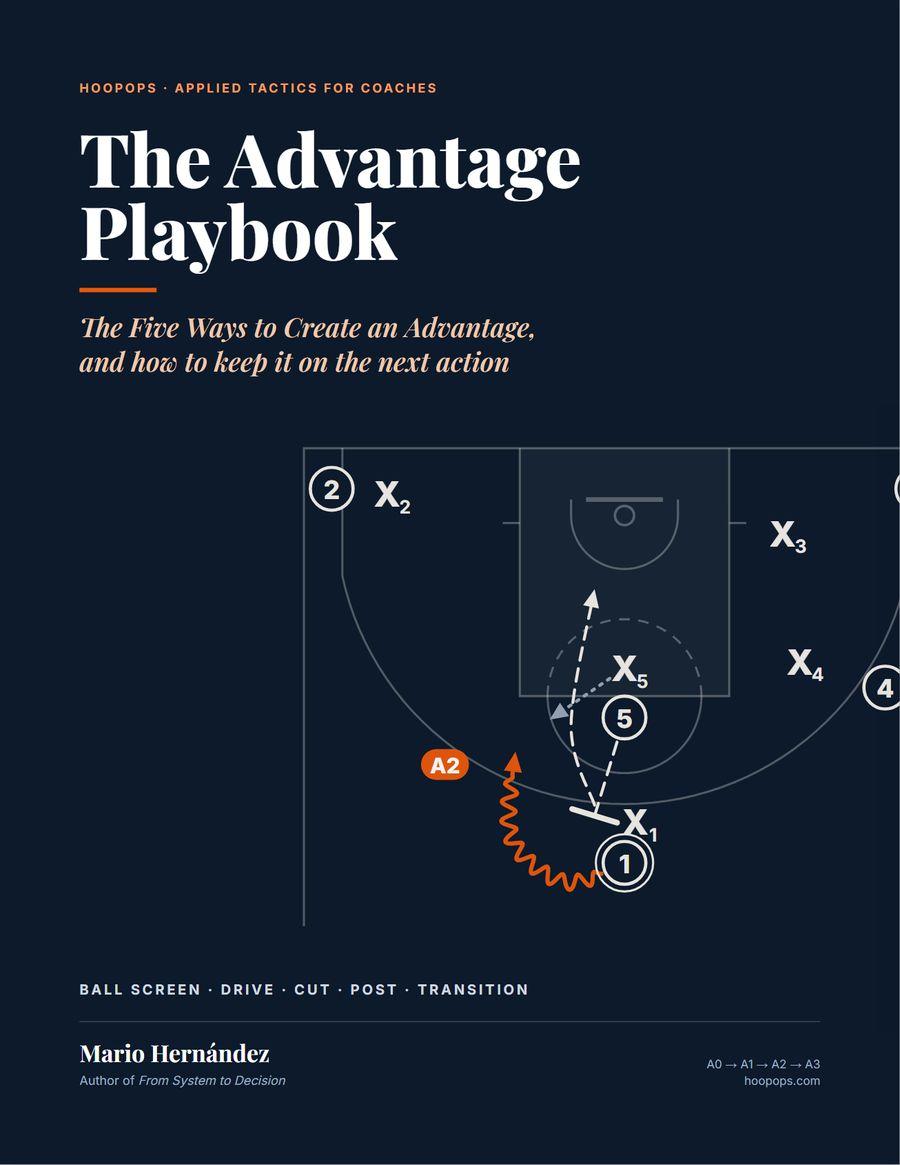
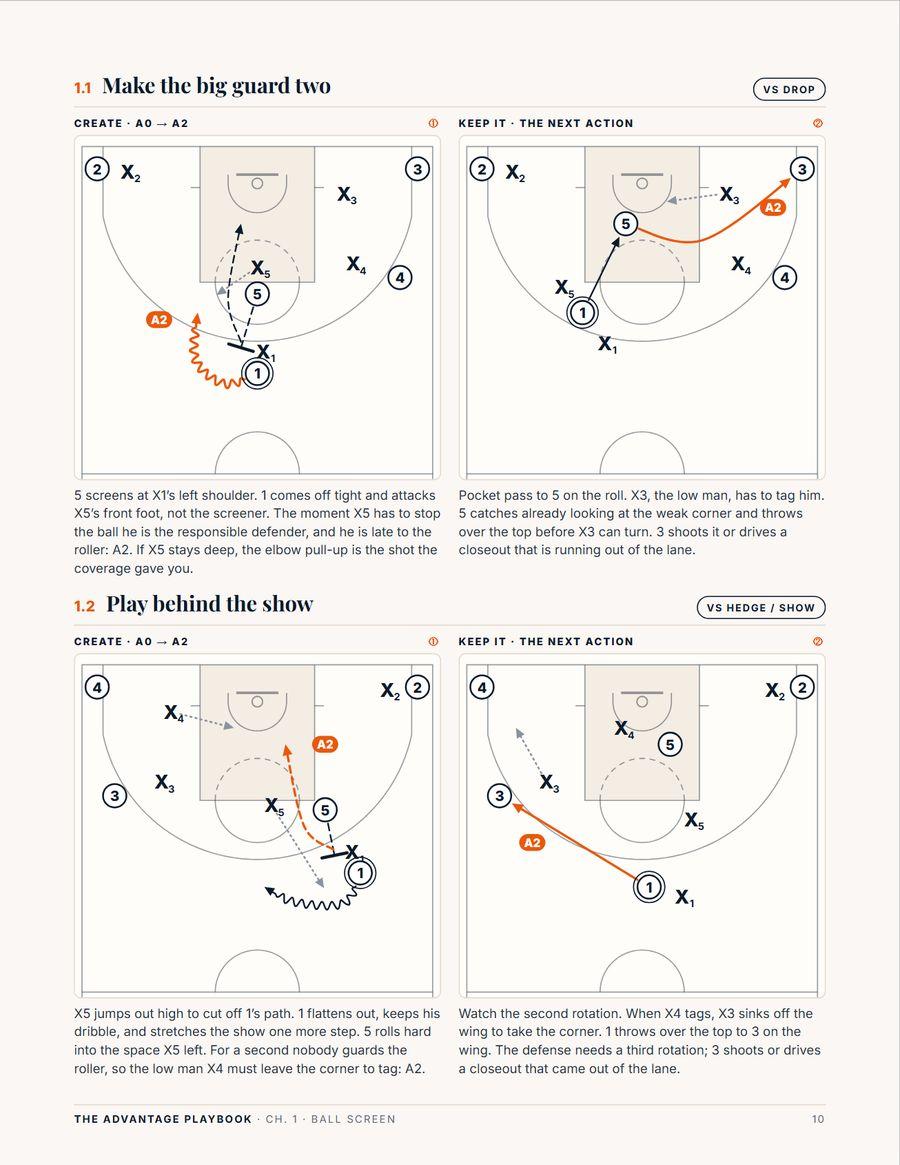
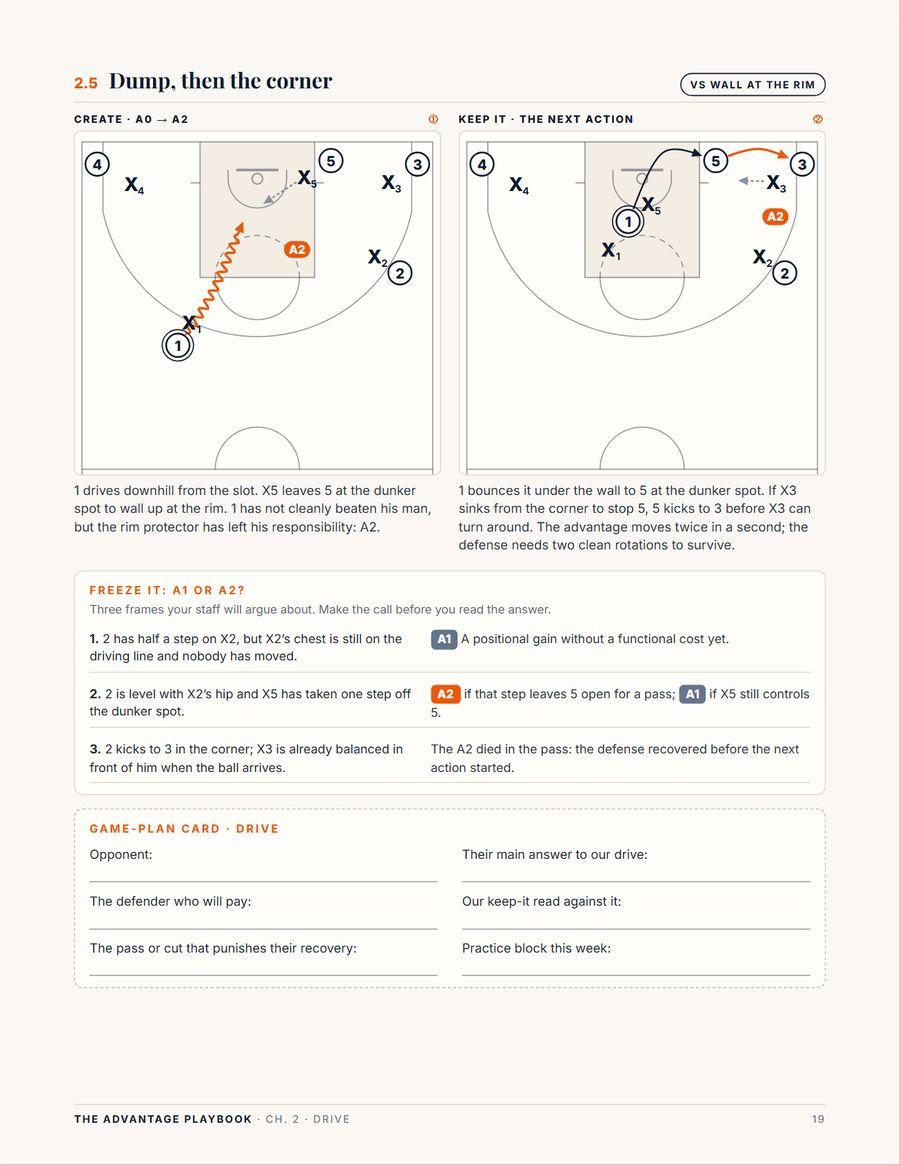
The five ways to create an advantage (ball screen, drive, cut, post, transition) and how to keep it on the next action.
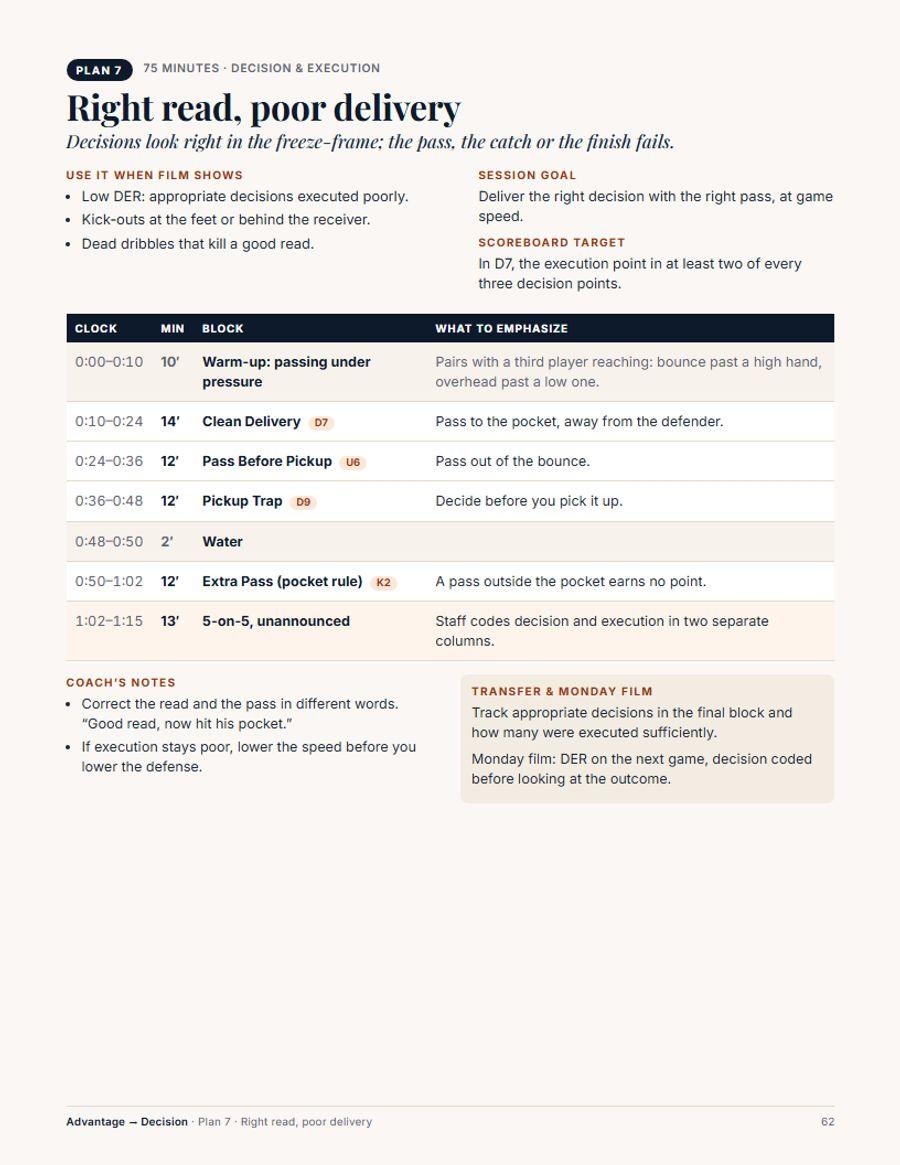
Train · the games
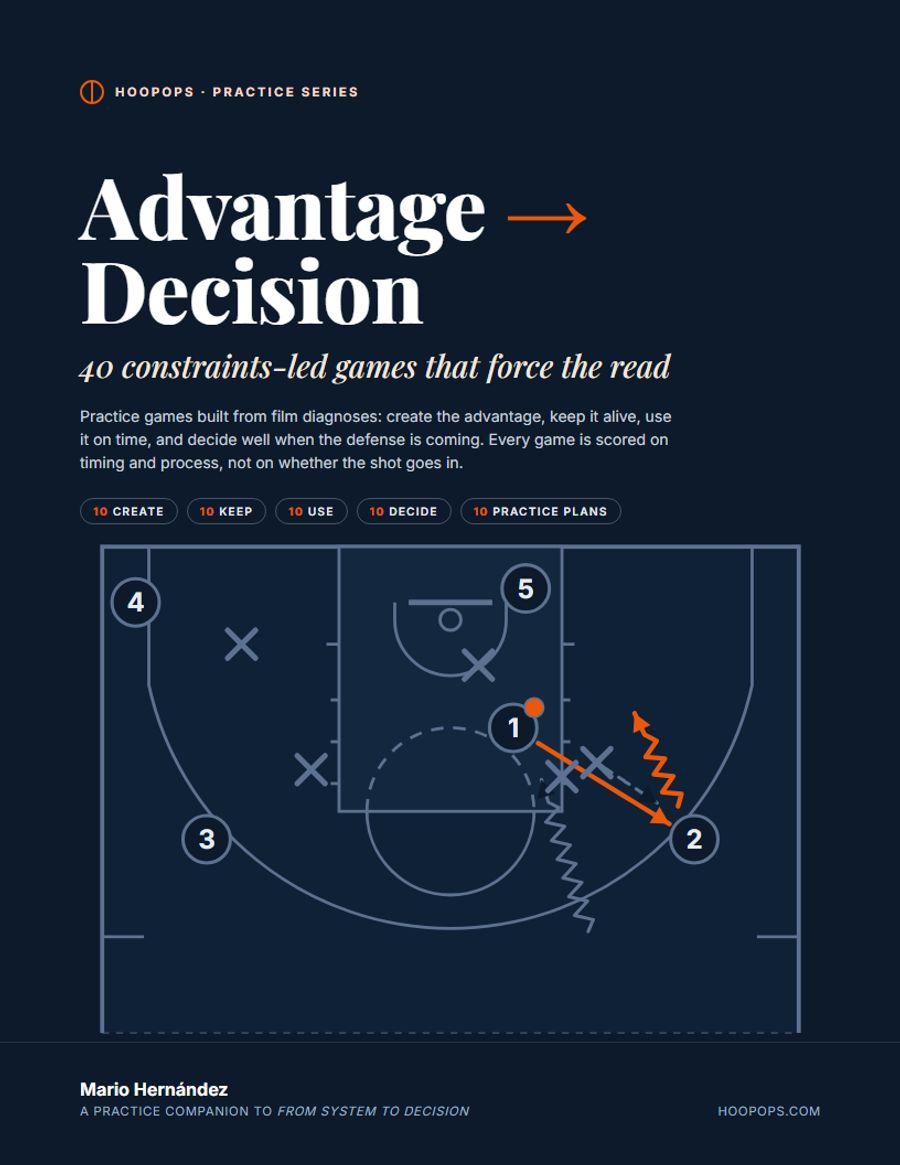
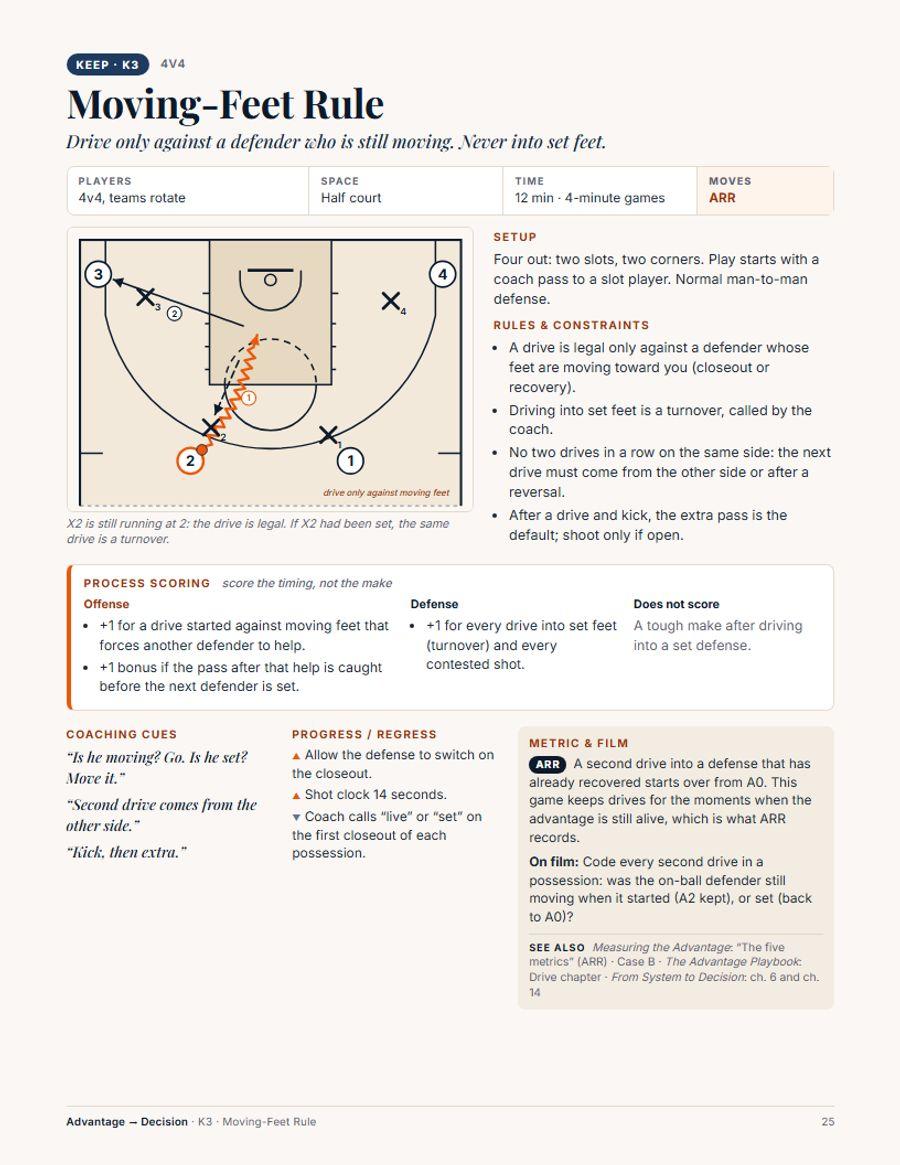
40 constraints-led games that force the read, grouped by the problem your numbers show.
Just the sheets
The editable sheets from the book: A2 manual and reliability, offense sheet, drill pack and practice log.
Everything together
The whole method, from the book to the practice floor. One purchase, every file.
| The book: From System to Decision (PDF + EPUB + 3 resources) | $29.99 |
| Measuring the Advantage (workbook + Analyzer) | $79 |
| The Advantage Playbook | $29 |
| Advantage → Decision (40 games) | $49 |
| Advantage Coding Toolkit | $15 |
| Bought separately | $201.99 |
The Advantage System
$149
+ tax · instant download · one-time
Get the system14-day money-back guarantee
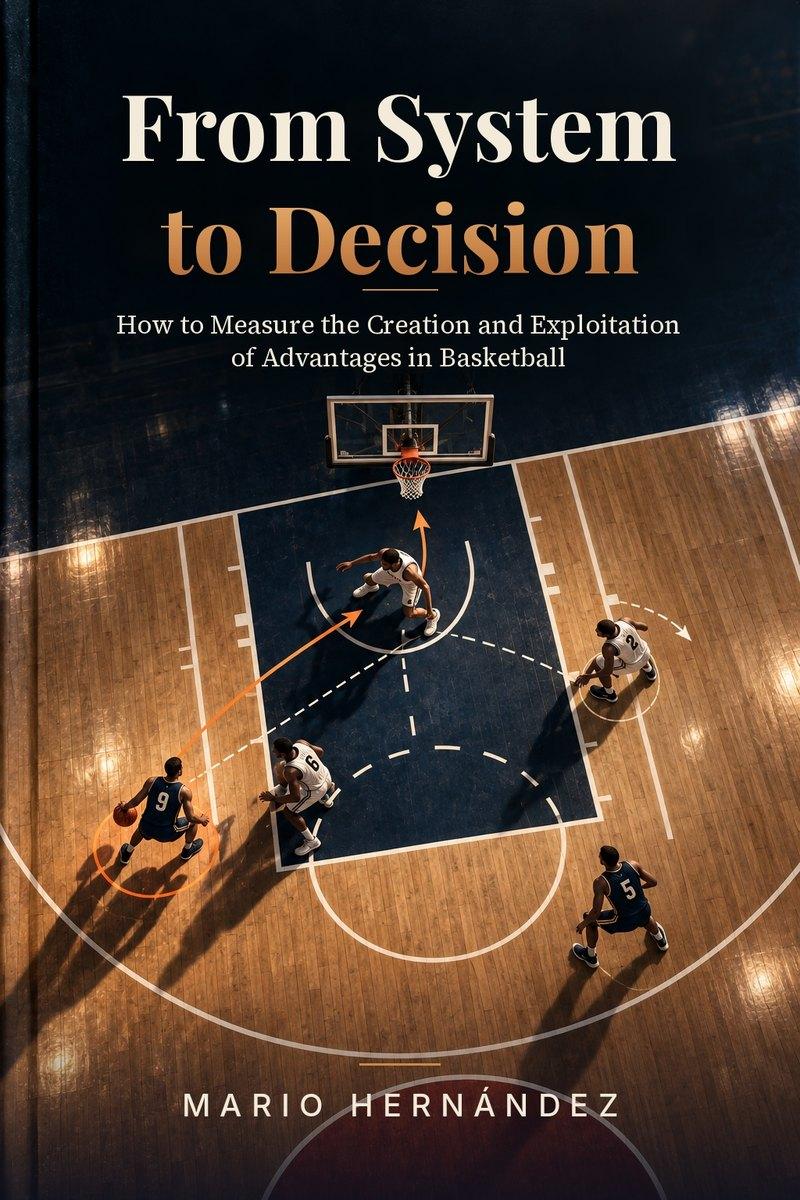
Built on the book
Mario Hernández is a basketball coach and the founder of HoopOps. The method started with a game he coached: competitive at halftime, beaten by a wide margin at the end, and no column of traditional stats could say why. Coding the film by hand, possession by possession, became From System to Decision. Every tool in this line applies that book.
See the bookPDF workbooks you can print, plus Excel spreadsheets that also open in Google Sheets. Everything arrives by email right after payment, with download links.
No. Normal game film, the spreadsheet and a pen. Coding one game takes about 30 minutes once you know the codes.
Both. The method describes what the defense has to solve, not how athletic your team is. The worked cases include a high school team, and the games include high school court notes.
Most analytics courses teach you to read numbers someone else produced: KenPom, Synergy, a data feed. This line teaches you to produce your own when nobody produces them for you, and then turns them into practice.
They are a methodology under investigation, and the materials say so plainly. There are no league norms yet: you build a baseline for your own team over a few games and compare against it.
Yes. Print and adapt the sheets for work with your own team and staff.
You have 14 days. Email info@hoopops.com and we refund you.
Not sure yet? Run the free 10-possession audit on your last game first.
Get the free audit